00:23
We are the Podcats, and welcome to our very
00:26
first podcast where we are going to introduce ourselves
00:30
and talk a little bit about why we are
00:33
even doing yet another podcast, Hidden Figures of Python.
00:38
And we have announced it already on social media.
00:42
And we are also going to address a
00:43
little bit some of the responses we've had.
00:46
So with me today, we have Mariatta, Georgi,
00:50
Cheuk, and we are all, all over the world.
00:54
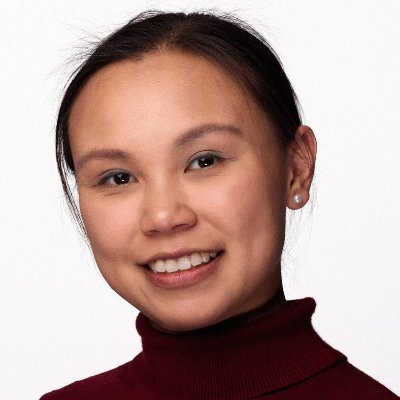
So I'm Tereza, I live in Hamburg.
00:56
I'm from Romania.
00:58
I started PyLadies Hamburg long ago, and
01:02
I'm involved in several of the Python
01:04
Software foundation groups like Code of Conduct
01:07
and Diversity and Inclusion. And, Mariatta?
01:12
Hi, everybody.
01:13
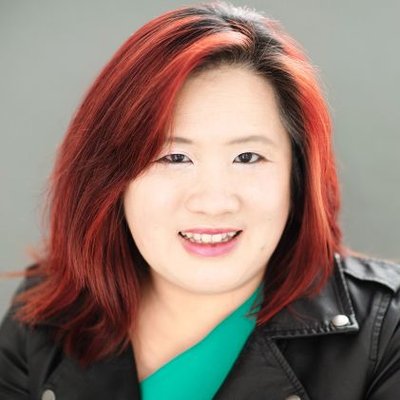
My name is Mariatta.
01:14
I'm in Vancouver, Canada, and
01:17
I'm a Python core developer.
01:19
I'm an open source maintainer and contributor.
01:23
And I'm involved in the Python community in a
01:25
lot of ways, not only as the open source
01:28
contributor, but also I run conferences, meetups.
01:33
I've been the chair of the PyCascades
01:37
I co founded the PyCascades Conference, and
01:40
I'm chairing PyCon US 2023 and 2024.
01:46
Go to you, Georgi.
01:49
Hello, everyone.
01:51
This is Georgi here.
01:52
I'm in Amsterdam.
01:55
So I'm actually a little bit everywhere.
01:59
So previously I've been living in Thailand and helped
02:04
out and organized and led PyCon Thailand, and also
02:09
Pycon APAC 2021, kind of not only Python related
02:15
events, but also several hackathons and, like Code War.
02:21
And I did organize RubyConf and co founded PyLadies.
02:28
And I've also actually been designing the websites for
02:34
PyCon and a few other main Python related events.
02:40
Passing the mic to Cheuk
02:42
Hello, I'm Cheuk.
02:44
I live in London.
02:45
Usually I'm not home because I am a
02:49
speaker at a lot of different places.
02:52
Right now, I'm in Tokyo, Japan.
02:55
So, hello.
02:57
Also, I am currently at the PSF board.
03:02
I've also been a PSF fellow since 2021.
03:05
And, yeah, I've been involved in a
03:10
lot of work in the Python community. Yeah.
03:12
So I think maybe we should just explain a little
03:16
bit why we come up with the name Hidden figures.
03:21
So we have been searching around and finding a
03:24
lot of ideas, and Cheuk even came up with
03:29
something crazy called Espresso Orange Juice, which was actually
03:35
just simply what I like to drink.
03:39
That was one of the first idea.
03:41
And then eventually, I remember Mariatta
03:45
came out with the "Hidden Figures".
03:46
So maybe Mariatta, you can explain
03:48
why it comes out with that.
03:50
You come up with that title?
03:54
Well, yeah, I guess it's really about
03:57
what are we doing in this podcast?
04:00
Like, what is the topic of this podcast is about?
04:03
And I guess when we talk about it,
04:05
we wanted to highlight underrepresented group and women
04:10
in the Python community because we felt their
04:13
stories aren't being shared enough, or I think
04:18
they're not getting the recognition that they deserve.
04:22
And when thinking about that, it brought me to
04:25
the stories, actually, there was a book about this
04:27
and a movie that was a big hit, the
04:32
Hidden Figures, which was also highlighting stories of African
04:37
American women in NASA in the past.
04:43
And I thought, this relates so much to what we
04:46
see in the Python community, and I thought, maybe let's
04:50
use the name the "Hidden Figures of Python".
04:54
Yeah.
04:54
So it's not just about the title.
04:56
I think the idea came up, kind
05:00
of brew into what it is now.
05:04
Starting from PyCon US last year, which I seen, everybody's there,
05:13
there's like a big party, a lot of people very
05:15
excited to see so many people and go to film
05:22
some podcasts while they meet some speaker or some guests
05:25
that they want to invite there in person.
05:28
So I think that's great.
05:29
But I have an observation about most of these
05:34
guests or people who have been interviewed are male.
05:39
So for me, it feels like, of course, these people,
05:45
they have achieved a lot of things, they got a
05:47
lot of respect in the community, but I feel like,
05:51
are there any women at all who kind of achieved
05:54
same level of contribution, getting respect from the community, but
05:59
hasn't been featured for whatever reason?
06:01
So that's why I think that we
06:05
need to do something about it.
06:07
So I talked to my good friends sitting
06:09
here, and they're all on board of this
06:12
idea that we should do something.
06:14
So that's kind of how it got into we want to do a
06:17
podcast, we find a good name for it and why we're here.
06:21
So I think Georgi and I are in
06:23
the Diversity and Inclusion workgroup with the PSF.
06:26
And here one aspect is also visibility and also highlighting
06:34
role models, because another side effect of seeing a lot
06:39
of events and podcasts where there's mostly men talking or
06:44
doing things or being highlighted that they are doing it
06:47
makes it not very inviting sometimes. Right?
06:50
And if for people that want to get started,
06:52
and they are from underrepresented groups in Tech or
06:55
women, and if you don't really feel like you
07:00
don't see role models, you don't really see that
07:03
there is space for you, like an inviting space.
07:08
But I know once you start getting involved.
07:11
So we have PyLadies, we have
07:12
all sorts of organizations in Python.
07:15
Once you start getting involved, you see that
07:17
there are people, there are role models.
07:20
It's just that it's not very obvious.
07:23
And I think, how do we make
07:27
that a little bit more obvious? Right.
07:29
So this is not about taking space from other people.
07:31
Right?
07:32
It's more about highlighting that the space
07:35
is a lot more diverse than it's.
07:38
Looking at the moment, if I can add.
07:41
I feel there is a lot
07:44
of power in highlighting role models.
07:47
For example, I could share my personal experience.
07:50
Like, when I went to PyCon for the first time
07:53
ever, I saw lots of speakers, men and women.
07:56
When I go to speakers, even though I saw
08:02
lots of speakers, it was only when I saw
08:05
another women, another women of color on stage.
08:09
That's the moment that I feel inspired myself, that,
08:12
oh, maybe I want to be like her.
08:15
I want to be speaker, too.
08:17
And that kind of power, I did not
08:20
get it unless I actually see somebody.
08:22
And I feel like there is responsibility in
08:27
community leaders to not only provide content, but
08:31
making sure you are highlighting diverse members to
08:37
be able to further inspire other people.
08:40
So that's what I want to get.
08:43
One thing, Tereza, you brought up about
08:47
this, and also Mariatta bringing this up.
08:51
I personally was a bit surprised when I
08:55
actually started stepping up as the organizer, the
09:00
PyCon Thailand lead at the first time.
09:04
The moment I took over this task,
09:08
I see that there were more women
09:11
that actually started joining and participating.
09:17
The year when I actually started, there was slightly better,
09:20
maybe like three or four, I would say from 10%
09:25
of female speakers, it increased to about 20%.
09:30
And now that the ball got rolling, PyCon Thailand
09:37
this year has about almost 50% female talk submission.
09:45
And that is amazing.
09:47
And this is what I meant by it
09:50
is not because, or what we meant.
09:52
It is not because there are
09:55
no female role models out there.
09:59
We just need support.
10:02
The moment when I was in PyCon,
10:04
us, we attended PyLadieslunch.
10:08
I mean, that's not only female,
10:10
of course there are males joining.
10:12
But it was so empowering.
10:15
When you are there, the ladies who are so
10:18
afraid to step up, actually have the courage to
10:22
step up and talk about their stories, talk about
10:24
how they went from zero to something to something
10:29
that everyone knew but was not talked about.
10:32
And I think this is part of reason
10:34
why I said yes to this podcast.
10:37
Yeah.
10:37
So I think it's a very good point of, you have
10:41
to have some role model there to take the lead.
10:43
That's why I keep talking to organizers that, do
10:47
you have any women in your organizing team?
10:50
Not just as a volunteer that do some small
10:52
tasks and stuff, they're actually in the, I would
10:55
say a leadership role, that they're helping to make
10:58
decision, helping to be in the discussion and stuff.
11:02
We need that because you can say all
11:06
what you want, that we support diversity.
11:08
But even if it's so simple, right.
11:10
We are not talking about finding someone
11:13
who may be quite difficult to find.
11:16
It's just, well, this world has two gender.
11:20
Well, maybe more than two gender,
11:22
but majority, there's two gender.
11:27
Even that finding, let's say, women,
11:29
to get involved, to be there.
11:33
Have you ever tried?
11:34
Have you do it?
11:35
Can you show that you have done it?
11:37
Actions speak louder than words.
11:38
You can't just say that you support diversity and just
11:41
keep onboarding people who look like you to be because
11:44
you just feel more comfortable working with them.
11:46
So that brings us to the point where
11:50
we want to find out why we keep
11:54
seeing men appearing in podcasts and stuff.
11:57
So, Mariatta volunteered to data research.
12:00
So, Mariatta, do you want to talk a little bit about.
12:06
Think.
12:08
I guess we just didn't have data about it, right?
12:12
Personally, when I see podcast
12:15
series announced, I pay attention.
12:17
I pay attention that it's men in a podcast, and
12:24
the next week is men again and again and again.
12:26
And I thought maybe I should come up with the
12:29
data, maybe we should actually collect so that it doesn't
12:32
become just what Mariatta thinks and becomes real data.
12:36
And when I collected the data in September of
12:40
2023, I collected data from three popular podcasts.
12:47
And you can read the result in
12:49
our blog post, Pypodcats.live/blog.
12:54
It's a long URL, but find it basically what I found
12:58
out of three different podcasts that's been going on for years
13:02
that has more than 100 episodes, each of them.
13:07
Out of those episodes, 666 episodes, women appeared
13:14
in only 17%, like 100 or so.
13:18
And it's not also that.
13:20
There aren't 117 different women
13:23
who appeared on the episodes.
13:25
Some women appear multiple times, so in
13:27
fact, there are only 90 something episodes.
13:31
94, I believe, women out of
13:36
540 guests, so also 17% women.
13:44
These podcasts are considered as top Python podcasts.
13:49
If you go to Google and you try to
13:52
look Python podcasts, these are in different search engines.
13:57
I tried different ones.
13:58
These three podcasts are the ones that appeared.
14:01
And I feel like, yes, they have different
14:06
reasons, maybe for doing their podcast, but appearing
14:11
on the podcast also comes with a power
14:14
to influence the Python community.
14:17
And why are women being highlighted there?
14:22
That's a question we're wondering, right?
14:26
Anyway, if you like to read the blog post?
14:28
We announced it earlier.
14:30
We got some comments about it.
14:33
Does anybody else want to add to those?
14:36
Yeah, I wanted to add something.
14:38
I think maybe this is just for myself, like when
14:43
an established entity is inviting me to speak these days
14:49
or to do something, and then I check the website
14:52
and they are already like, I'm not represented there.
14:58
I usually get the feeling that, why
15:01
are they writing to me now?
15:03
They want to improve their diversity numbers.
15:08
I think it's really hard in general for
15:10
something that has already been going in uncontrolled
15:14
direction to switch to being intentional about diversity.
15:19
It's way more work.
15:20
So I think we have to acknowledge this
15:24
if they would start from scratch and try
15:28
from the beginning to be representing more groups.
15:32
So I think this might be also a reason why, because
15:39
diversity conversations about diversity are fairly new, at least not in
15:42
the US, but in the rest of the world.
15:44
I think being intentional about diversity in a lot
15:47
of circles is not something that was done a
15:54
lot in the past, so to say.
15:55
So I think for things that are already established,
15:58
there might be a little bit of an effect
16:02
that leads to them being finding it harder to
16:05
attract diverse speakers at this moment.
16:09
So they will have to go the extra mile for that.
16:15
I also feel a little bit like sometimes people tend
16:21
to run away from the name DNI or diversity and
16:25
inclusion because they say you're doing some kind of trend
16:29
thing because you want to be part of the spotlight.
16:33
So are you actually doing that for the reason
16:36
of being popular or being mentioned about, which also
16:44
kind of contradicting, you know what I mean?
16:48
It's like some people wants to be part of
16:49
it because they invite other people that is from
16:54
the minority groups or underrepresented groups and to just
17:02
bring up and say, hey, we want to include
17:05
you, or simply put rainbow colors on their logo.
17:10
And do you really mean that?
17:14
That's the thing.
17:15
Do you really mean that you're doing diverse,
17:19
inviting a diverse and inclusive group, or are
17:25
you just being part of it to be
17:29
the trend of 2021 or something like that?
17:37
And this is something that I find some people tend
17:42
to run away from, and at the same time, some
17:44
people wants to be that just for the spotlight.
17:47
But rest assured, the four of us, I can
17:51
feel that it's totally because we feel that it's
17:56
like something is burning Inside your heart.
17:59
It's like you want to say something, but
18:01
you're just waiting, just waiting for someone to
18:05
pop out to just make that difference.
18:08
And we realize that we still don't see anyone.
18:11
And that's why I say, you know what, let's just do it.
18:15
We can do it.
18:17
There's not going to be a tomorrow.
18:20
And I think that was part of
18:22
the reason why we are here too.
18:25
But I would like to add, wait
18:27
a second, I would like to add.
18:28
So I think I heard this
18:29
term, it's called purple washing.
18:31
When you're doing diversity for making it look
18:33
good, like you have green washing for environment.
18:38
I think at this point, if other groups or
18:43
other podcasts, conferences, if they're doing diversity for all
18:49
the wrong reasons, I also don't really care.
18:52
As long as they're doing it, the work, the
18:56
outcomes are still going to be valuable, right?
18:59
So I would say to everybody out there who
19:02
is thinking, okay, but what if my reasons are
19:05
marketing and make our podcast look good and whatever.
19:09
Yeah, it doesn't matter, just do it. Do the work.
19:12
The work is hard and have more diversity.
19:16
And yes it's going to have all sorts of
19:19
benefits, but you'll see the work is hard anyway.
19:23
I agree.
19:24
I personally see the numbers.
19:26
I don't care what's the reason of doing it.
19:28
But if the result is having more diverse, let's say
19:33
we can go back to Mariatta's research in a bit.
19:36
Like, let's say the number of women being
19:38
invited or actually appearing in a podcast is
19:41
increasing, then that's what I want to see. Right?
19:45
I don't care if it's like
19:47
over spotlight, whatever, it's hard work.
19:50
I can tell you doing diversity
19:52
and inclusion work is hard work.
19:54
It's not always get appreciated.
19:56
It's doing something like sometimes you have to fight
19:59
against what is popular opinion and stuff, right?
20:02
You have to fight against the current.
20:04
And even if someone started just want
20:07
to, for whatever like quotation, wrong reason.
20:12
But as long as they put in the work, as long
20:15
as we see the result, we should still appreciate that.
20:21
So let's go back to the numbers, maybe.
20:27
Well, I just wanted to mention though,
20:33
I don't know how to say that.
20:34
I find it annoying if people say diversity is
20:39
doing diversity work is something trivial or something easy.
20:44
You're doing it just because you
20:45
want to get a spotlight.
20:47
This is harder than writing code.
20:50
Writing code is very exact, it's factual.
20:53
There's a formula that you can apply
20:57
again and again to various code base.
20:59
Like doing this kind of work is hard.
21:02
And personally for me, I really rather
21:05
be writing code and writing bots.
21:06
But I care enough about this that I
21:09
want to be participated on this thing.
21:15
I give talks if I talk about my
21:18
code, my bots, I feel very happy.
21:21
I will be able to finish that talk in like a
21:24
day or two, I'm done and I feel super happy.
21:28
But sometimes I talk about diversity,
21:31
I talk about the community.
21:33
Those talks takes me at least two weeks to prepare.
21:37
And then during the rehearsal of that talks, I
21:41
feel super sad and angry and not happy.
21:46
It's a lot of mental
21:49
burden being involved in diversity.
21:52
And yeah, I find it annoying when people said,
21:56
oh, it's just diversity, as if it's easy.
21:59
Anyway, I'm just rambling.
22:03
No, I don't think it's rambling.
22:06
I totally agree.
22:10
I think all of us here, all four
22:12
of us here has been through that stage.
22:17
I remember when I started creating just
22:20
simple meetups and month after month, I
22:26
was literally the only female there.
22:31
And all the other attendees were male.
22:35
And someone just said, yeah, because
22:42
female don't want to speak.
22:48
An interesting thing, one of the company's founders, he
22:52
was saying that he was there because he just
22:56
tried to get hire new Python developers.
23:02
And he said, you know what,
23:04
I cannot find female developers.
23:07
I've been hiring, no one is there.
23:13
I step into his office one day and I look
23:16
around the office and there was literally like 90% men.
23:21
Imagine if you are the single woman working there,
23:24
do you feel comfortable, do you feel comfortable working
23:30
there if you are the only one?
23:33
So I think there are many ways you can
23:36
make an effort to make a difference, not only
23:40
doing the first step, which is super important, because
23:43
someone needs to have that difference there.
23:46
And also, I mean, 2000% disagree that
23:55
there's no female developers out there.
24:00
Yeah, I would like to grab that point and elaborate
24:04
a little bit, because it's not just a workplace, right?
24:08
As you can see, the response from one of the
24:11
podcast organizer and from other event organizers as well, I've
24:15
seen this many, many times that they are thinking like,
24:18
well, we just choose speaker regardless of gender, we just
24:22
choose whoever we think is great.
24:25
But the point is, I think usually
24:30
it's a point that got overlooked.
24:32
I want to believe that nobody do it on purpose
24:36
too, but people miss the point that actually now we
24:42
are not like men and women are not.
24:44
Well, we are talking about in general now that's
24:49
not in a level playing field, because young boys
24:53
have more access, more encouraged to do something technical,
24:57
to play with computer, play with computer games versus
25:01
young girl may get less exposure to those, they
25:05
may not be encouraged.
25:07
It's just a fact.
25:10
So saying that we just chose someone regardless of the
25:14
gender, I think is a bit kind of overseeing the
25:18
fact that we are not actually start from the same
25:23
level, because by the time look at how many who
25:29
choose the STEM object versus because why now there's more
25:34
female university students, but still not a lot of them
25:38
choose to study science study.
25:45
Actually, I read on this data one time in Asia
25:51
and it's a very interesting data that I've seen.
25:56
There are more female working as doctors, scientists and
26:06
all science and chemistry related and also data related
26:13
job, but apparently related to it was much lower.
26:21
But back then, years before even
26:24
my partner's mom was actually coding.
26:29
So what happened there?
26:31
That's a very interesting question,
26:33
like what happened there?
26:34
And I see that some of the Asians family,
26:37
they also feel like, oh, because being a doctor
26:43
is well regarded, being a scientist is well regarded.
26:50
There was something very interesting that after reading this
26:54
data, I was like, so what happened is developer
26:58
something that sounds different, more different than scientists and
27:05
doctors and chemists and et cetera.
27:09
I don't know if it has to
27:11
do much with being well regarded.
27:12
So the way I read about it, at
27:14
least in the west, what happened was that
27:18
to programming, it just became a powerful job.
27:24
And it's just how you have
27:28
class system, you have gender system.
27:29
It's just our society is pushing the privilege of
27:34
power on the people that usually have that privilege.
27:37
So then you have, it became so women didn't get
27:44
pushed, they got pushed out, out of the job.
27:46
So it's not like in the end, there's all sorts
27:50
of ways in a society how you push a whole
27:53
group out of something, I guess media and everything, that
27:58
at the end you think it was another narrative, but
28:00
in the end that's what really happened, right?
28:02
So it's been prestigious, like
28:05
financially speaking, a powerful job.
28:07
And then it just went to the people that usually have
28:11
the power in our society still just wanted to come round
28:16
out, so a little bit in case everybody forgot, right?
28:21
So Mariatta did research, published a blog post.
28:25
We also reached out to the podcast organizers
28:28
to say, hey, we're going to publish this.
28:32
Do you have anything to.
28:34
And someone, one replied, right?
28:37
And I think some of the replies are
28:40
also in public, they're on social media.
28:42
And yeah, maybe we wanted to take the
28:46
rest of the podcast to discuss a little
28:49
bit this, right, like what was the replies?
28:51
I'm also maybe to say for the future in general from
28:57
diversity work is like, how do you reply when you did?
29:00
Maybe something.
29:02
What would be a good way to reply for people
29:04
who want to reply usually say in diversity and inclusion.
29:09
When you did something to offend someone
29:11
accidentally or not, you apologize and you
29:15
say, I will do better next time.
29:16
So that is the gracious way of replying, when
29:23
in our case, the data does show that there
29:25
has been a clear trend in one direction and
29:28
justifying is sometimes not really helpful.
29:32
It also makes other people feel bad afterwards.
29:35
Right? Yeah.
29:36
I think Mariatta already established a point that when we
29:41
do this research, we just like, out of curiosity, and
29:45
we chose these podcasts because they are popular.
29:48
So first of all, congratulations.
29:50
If you got chosen, you are popular.
29:52
But I would always give them the kind
30:00
of thing that it may be oversight. Right?
30:02
Again, it may be oversight.
30:04
Benefit of doubt.
30:06
Yeah, I don't want to use that word
30:08
because usually that word means that we are
30:11
accusing someone, but we are not.
30:14
But yeah, I think that it may be an oversight, and it's
30:20
good that we bring it up and have a discussion, so maybe
30:24
we will figure out how to make it better together.
30:27
Yeah, I think I also want to point out
30:29
that we are not actually trying to pinpoint at
30:32
any podcast here or anyone that is among the
30:37
community, which is really not our intention.
30:41
We just want to figure out why is that?
30:45
Just like what Mariatta said, not just out from
30:48
Mariatta's head, nor Georgi's head, nor Tereza's head, or
30:52
Cheuk's perception that there are lesser women.
30:56
So data speaks the truth. and I personally
31:06
It's not only, to be honest, not only female.
31:10
I would even support that.
31:12
We will invite underrepresented folks.
31:16
And I grew up with people who
31:21
are misrepresented many times, especially like the
31:27
gays, the lesbians, and all this.
31:31
And I think they are just as human as any one of us.
31:38
I'm not going to make any judgment,
31:40
and we are not making any judgment.
31:42
I'm just going to make it simple to say
31:43
that we are simply drawing out information and data
31:47
and we are not pinpointing anyone else.
31:52
I would also like to. Yeah, or Mariatta said.
31:54
Sorry, go ahead.
31:56
I guess I just want to mention, I feel
31:58
encouraged by the story that we have even in
32:01
the Python and PyCon community, because at one point,
32:05
if you go to our about page, at one
32:08
point, the PyCon speakers were like 99% all men.
32:13
It's just 1% is woman speakers.
32:18
But it's got better over the years
32:20
because there are several groups of people
32:23
who intentionally try to make it better.
32:26
It starts with identifying, oh,
32:28
there's not enough women here.
32:30
What are we going to do about it?
32:31
And actually doing something, highlighting
32:34
the importance of it.
32:36
And over the years, this got improved.
32:39
And I think this is what we are trying to do here.
32:43
We want to start by highlighting
32:46
that there is an issue here.
32:48
What are we doing, what can we do,
32:51
and what can you all do? From us,
32:54
We're trying to just highlight more women and
32:57
underrepresented group members in the Python community.
33:00
So maybe there are other ways of
33:03
what you can do as well.
33:05
So go ahead, Tereza.
33:07
Yeah, I just wanted to add that maybe for me personally,
33:14
I don't really need to focus so much on the why.
33:16
I mean, there's all sorts of whys, and some of
33:18
them are not really constructive for moving forward, but rather
33:26
focus on what can we do to make it better.
33:31
So I think for conferences, all of us here
33:37
have organized conferences, different conferences, and then in a
33:41
lot of places there were quotas, right?
33:43
I mean, it's like, hey, some conference they said, we
33:48
want to have this kind of diversity, and then we
33:50
also want to have this other kind of diversity.
33:52
And those were like, at the
33:53
beginning, before speakers were selected, right?
33:56
So not after.
33:59
Oh, we found all the men's speakers.
34:01
We found like ten men's speakers.
34:03
Now we need to look for women
34:04
as well or something like that.
34:06
I've seen that also happening. Right.
34:08
But that's a little bit like the wrong direction,
34:12
I think, starting from like, hey, what is the
34:14
end result that you want to have?
34:16
And then how do we get there?
34:18
Or how do we encourage more to come in?
34:21
Yeah.
34:22
So we can use this podcast as a platform
34:26
to highlight that there is an amazing amount of
34:29
awesome people from all sorts of intersections of diversity
34:34
in the world that are doing Python.
34:37
And they have really successful stories and less successful
34:41
stories, direct or non direct, to get to where
34:44
they got that they will share with us.
34:47
And then all these people can then be
34:50
invited and all the other podcasts because we
34:52
found them, we are helping out.
34:54
Exactly.
34:54
Actually, that is the point.
34:57
And I think you will see us very
35:00
soon with all the invited list of speakers.
35:03
We are really excited and we have already
35:06
gotten quite a few responses of the speakers
35:10
that we are going to invite.
35:11
So stay tuned to our podcats.
35:16
Meow.
35:17
So if you want to send us
35:19
any message, meow@pypodcats.live
35:25
And that's how you can actually catch us.
35:29
And maybe if you want to speak on
35:32
one of our episodes, just write to us.
35:36
Also, even if this would be your first podcast podcast,
35:42
this would be a very first time friendly platform.
35:47
Also, if you're looking for female speaker. Yeah.
35:50
If you are looking for a
35:52
female speaker, panelist, keynote speaker.
35:56
You know where to look.
35:58
I promise, all of our guests are great. I promise.
36:01
So, yeah, until today, you could say there are
36:04
no women speakers out there, no women doing Python.
36:07
Until today.
36:08
But from now on, there won't be any more excuses.
36:15
Yes, I should mention that.
36:19
I want to mention that we follow the PSF code
36:22
of conduct in this community in the pypodcats episodes.
36:29
Basically, the PyPodcats hosts and guests and commenters
36:34
are bound by the PSF Code of Conduct.
36:37
And as well as we are actually supported
36:40
by the PSF, all our episodes will be
36:44
published on the PSF's YouTube channel.
36:48
And because of the Code of Conduct, we hope
36:52
that this encourage more participations from underrepresented group members
36:57
who might feel that, well, they might get attacked
37:00
if they appear on Internet and things like that.
37:03
So we are really something we care about.
37:10
I think.
37:11
Thank you Python Software foundation for supporting
37:15
us, because it doesn't come from zero.
37:19
We also need some support.
37:20
All this takes time.
37:22
All this takes.
37:25
Yep.
37:26
Thank you, PSF, for everything.
37:28
Thank you for your attention and
37:30
see you in the next podcast.
37:33
Bye bye.
37:35
Adios.
37:37
Bye.